
Virtual private networks (VPNs) are crucial tools for protecting your online security and privacy. At their core, VPNs are networks that encrypt your traffic, masking your IP address and adding an extra layer of security that keeps your communication private. This can stop marketers from tracking and creating profiles on you, from collecting and sharing your data, and can also help you circumvent location-based blocks.
A reliable VPN can also grant you access to streaming content libraries outside your region. This is perfect when you are away from home and don’t want to miss your favorite show. As a bonus, when you subscribe, you can often take advantage of additional privacy features, such as ad blockers, Dark Web breach alerts, data breach scanners, and password managers.
In ZDNET’s latest update, we thoroughly revised our guide to the best VPNs of 2026, and refreshed our top recommendations and worthy alternatives.
Get more in-depth ZDNET tech coverage: Add us as a preferred Google source on Chrome and Chromium browsers.
Best web services deals of the week
Deals are selected by the CNET Group commerce team, and may be unrelated to this article.
What is the best VPN service right now?
My pick for the best VPN in 2026 is NordVPN. NordVPN offers the full package — fast speeds, stable connections, an expansive server network, and excellent streaming capabilities. It’s also easy to use with a variety of apps for your Windows, Mac, and mobile devices. Plans start at $2.69 per month.
My second choice is ExpressVPN This secure VPN offers some of the best and most consistent speeds across its global servers while still being user-friendly. Expect to pay $2.44 per month on a two-year plan, and you also receive four months of free service on signup.
Also: The best smart TV VPNs of 2025: Securely stream your favorite shows worldwide with the best VPNs on the market
The ZDNET team has decades of experience in the VPN arena, and I’ve tested all the VPN services on this list. I rigorously evaluate them through frequent real-world speed tests and rank them based on the number of servers, security features, price, usability, and other factors important to you.
If you’re interested in signing up for a VPN, pick a trustworthy service that doesn’t drastically impact your speed or internet connection. You should also consider the size and variety of its server network, whether or not it’s right for streaming, and how the VPN provider treats user data.
There appears to be a price war underway, and some subscriptions are the lowest I’ve seen since Black Friday last year. These are my top picks for 2026.
Sort by
All
Countries and servers
Usability
Speed and performance
Security
Price
The best VPNs of 2026
Show less
NordVPN is one of the most widely used VPNs, and for most users it ticks all the boxes. This makes it my top pick overall in 2026.
Why we like it: NordVPN is secure, fast, suitable for streaming, and has all the features you’ll likely need. I’ve found it to be one of the fastest VPNs with the most consistent speed measurements and rapid initial server connectivity.
While it’s worth noting that rival ExpressVPN is often faster in some cases, averaging out at higher speeds with long-distance servers, NordVPN tends to perform better when you use smart, local servers.
NordVPN is fine for basic use but offers many features beyond a mere VPN tunnel, including peer-to-peer (P2P) sharing support and an optional second layer of encryption through Double VPN. This allows you to set up a dedicated IP address to run a VPN that also acts as a server.
In my tests with Netflix, NordVPN emerged as a top VPN for streaming content with a high success rate in accessing geo-blocked content. When set up with the Privacy Hero 2 router, it also did exceptionally well in accessing streaming services worldwide.
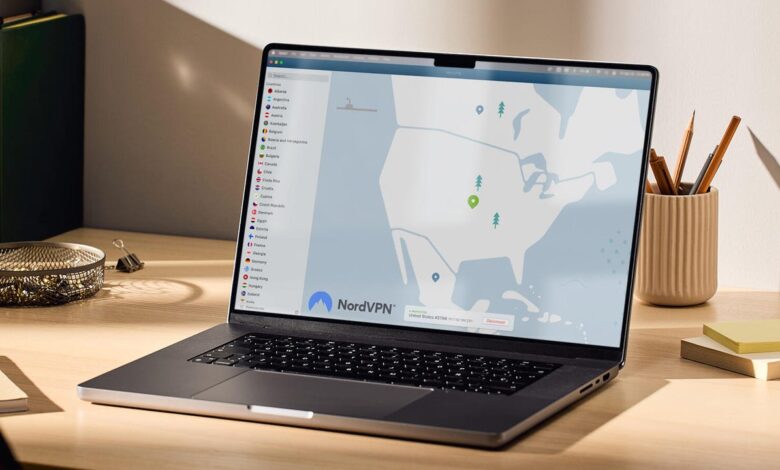
Last year, the company launched NordWhisper, a new protocol that allows users to connect to VPN servers from networks that typically limit traditional VPN traffic and enforce restrictive network policies. In a recent service update, its macOS and Windows apps have also been refreshed. Sadly, the interactive map is now gone, but it is a much cleaner interface than before, making it easier for users to navigate.
NordVPN’s kill switch activates if your connection suddenly drops, protecting your connection and data. There’s also a handy pause function if you need to access a local website or service and revert to your original IP address.
In its fifth independent audit, NordVPN says its no-logs policy has been verified. There’s also good news for fans of NordVPN’s secure device network service Meshnet. The company listened to user feedback and reversed its decision to close it down at the end of 2025.
Review: NordVPN: Consistent speed and performance
Who it’s for: Those who want the best overall VPN around. It’s a solid, fast VPN to use across different devices, and for a relatively affordable price. NordVPN is compatible with all major platforms and provides a server network of 126 countries. It also allows you to connect 10 devices simultaneously under one account and is excellent for streaming.
Who should look elsewhere: NordVPN will suit most users’ needs, but if you want speed first in faraway servers, ExpressVPN is the right alternative.
You can pick between three types of plans with two-year, one-year, or one-month contract terms. Your choice depends on whether you want advanced features such as a password manager, data breach scanner, cloud storage, or file encryption.
Prices start at $2.69 per month on a two-year plan or $4.29 per month for a one-year subscription. Alternatively, you can try NordVPN for a month and take advantage of its 30-day money-back guarantee.
NordVPN features: Simultaneous connections: 10 | Platforms: Windows, macOS, iOS, Android, Linux, Chrome, Firefox, Edge, Android TV, Fire TV, tvOS, and routers | Countries: 126 | Kill switch: Yes | Logging: Email address and billing information only | Money-back guarantee: 30 days | Trial: Seven days on Android | Trustpilot rating: 4.2 | Google Play rating: 4.6 | App Store rating: 4.7
Read More
Show Expert Take Show less
Show less
ExpressVPN is my top choice for the fastest VPN service around and one of the best VPNs you can sign up for.
Why we like it: Customers say it delivers a speedy and consistent connection, and I agree. NordVPN and ExpressVPN are well-matched in terms of speed, but ExpressVPN often outperforms when it comes to servers at a distance.
It’s one of the most popular, trusted VPN providers, offering a wide range of platforms. The service also has an expansive network with servers in 105 countries and recently
Compatible platforms include Windows, macOS, iOS, Android, Fire OS, and tvOS. The service also works with Linux, which was
In total, 10 to 14 simultaneous connections can be linked under a single account. Although this recently increased from eight, I would still like to see it become unlimited one day.
Review: ExpressVPN: Is it worth the price?
The company doesn’t log your browsing history, IP address, or traffic destination and operates a no-logs policy.
In recent ExpressVPN news, the company debuted three new offerings to its security solutions portfolio. ExpressKeys and ExpressMailGuard, available now, protect your credentials and email communication. ExpressAI, a new AI tool, will provide a confidential computing element.
Who it’s for: Individuals who see speed as king. This VPN has consistently ranked first in my speed tests over the past few years, on both standard broadband and fiber.
ExpressVPN is also the developer of Aircove, a router product line with ExpressVPN built in. This saves you the legwork if you want blanket coverage for all your home devices. Alternatively, you can manually set up ExpressVPN to work with gaming consoles and TVs that do not natively support VPN apps, but you may need to install the VPN directly on your router.
ExpressVPN recently switched to a
The best deal is the basic plan, which is $2.44 per month on a two-year contract, with four months of free access thrown in.
The provider also offers Advanced and Pro subscriptions, available for $3.14 per month and $5.24 per month, respectively, on a two-year term. These more expensive tiers include ExpressVPN’s ad-blocker, 12 to 14 simultaneous connections rather than 10, ExpressKeys, and ExpressMailGuard.
There is a 30-day money-back guarantee.
While customer service is friendly and polite, they persist in customer retention, so you’ll need to set aside some time if you wish to cancel after the 30-day period.
Who should look elsewhere: VPN customers who want the most budget-friendly option should consider Surfshark or another of my recommended, cheaper VPNs.
While ExpressVPN recently launched a free service, EventVPN, I can’t recommend it considering how ad-driven it is.
ExpressVPN features: Simultaneous connections: 10 – 14 | Kill switch: Yes | Platforms: Windows, macOS, iOS, Android, Chrome, Firefox, Edge, Linux, Fire TV, Android TV, tvOS, and routers | Countries: 105 | Logging: No browsing logs, some connection logs | Money-back guarantee: 30 days | Trial: Seven days on Android and iOS | Trustpilot rating: 4.0 | Google Play rating: 4.7 | App Store rating: 4.7
Read More
Show Expert Take Show less
Show less
Surfshark should be on your radar if you are looking for an affordable and attractive VPN for the long term.
Why we like it: In ZDNET’s Surfshark VPN review and tests, I found this VPN offers reasonable speeds and a decent server network.
It’s not the fastest or the quickest to connect, but the low price point provides excellent value for money and makes this VPN stand out as a mid-range, starter option.
With a server network spanning 100 countries, you have plenty of locations to choose from, making this VPN a good choice for streaming content at home or abroad.
Surfshark prioritizes security with AES-256-GCM, Perfect Forward Secrecy, and RSA-2048 encryption. The organization also upholds a no-logs policy, which has been verified. SecuRing also completed a recent infrastructure audit.
There are also no data leaks, according to my recent tests, which is precisely what you want to see from a quality VPN.
While Nord Security owns Surfshark, both NordVPN and Surfshark act independently.
Also: NordVPN vs Surfshark: Which is better?
I like its add-on features including anti-tracking, a search engine that doesn’t log your information, and a scanner that checks data breach lists for your email. With Surfshark’s multi-hop option, you can also connect through two VPN servers.
The company also debuted FastTrack in 2025, a route optimization system that may, in time, vastly improve its connection speeds, alongside 100Gbps servers and a new web content blocker.
Who it’s for: Anyone on the hunt for a consistently affordable VPN without any unwelcome price hikes. I’ve tested Surfshark for years, and pricing typically stays within the $2 – $3 per month range. The cheapest option, a two-year subscription called Surfshark Starter, costs only $2 per month at the time of writing, with three months free.
I would also consider the Surfshark One deal, at $2.29 per month on a two-year plan with three months free. Why? At this price, you also get an antivirus bolt-on for the equivalent of $0.20 per month.
Customers praise the support team for being excellent and quick to respond.
Who should look elsewhere: Surfshark provides excellent value for money, but it isn’t the fastest or the most advanced VPN. If you want the best speeds or advanced customization, check out my other recommendations, including NordVPN and ExpressVPN.
Surfshark features: Simultaneous connections: Unlimited | Ad-blocker | Two-factor authentication | Kill switch: Yes | Countries: 100 | Platforms: Windows, macOS, Linux, iOS, Android, Fire TV, Chrome, Firefox, Edge, tvOS, and routers | Money-back guarantee: 30 days | Trial: Seven days on Android, iOS, and macOS | Trustpilot rating: 4.4 | Google Play rating: 4.6 | App Store rating: 4.7
Read More
Show Expert Take Show less
Show less
Proton is a Swiss company that adheres to the country’s strict privacy laws and also provides a free VPN service. It’s pretty quick, too.
Why we like it: Under the slogan „privacy by default,“ this organization is focused on developing services — including encrypted email and a VPN — to enhance the privacy of activists, journalists, and the public.
Proton VPN takes a strong security approach, layering advanced protocols on top of encryption and offering customization options. Not only does Proton VPN have a kill switch, but it also supports torrenting and has an ad-blocker.
All of Proton’s apps are open source, there’s a no-logs policy, and the company reports that it is independently audited. The firm also created its own protocol, Stealth, which was designed to circumvent censorship blocks. If you head into settings, you can choose between WireGuard, Stealth, and IKEv2. I also like that you can see each server’s load.
Customers like Proton’s attitude to security and privacy. I find it easy to use, and the paid versions’ speeds are very good in local locations, and not reasonable when you choose a long-distance server. Although Trustpilot ratings are low, the feedback primarily relates to the firm’s free plan limits and customer support system.
There are free and paid options available, and if you need a free solution, this is one of the few trusted VPNs I recommend. In recent news, Proton VPN streamlined its server lists.
Review: Proton VPN
Who it’s for: Proton offers a free VPN service that is supported by paid users. It allows one machine to connect without bandwidth limits and provides access to servers across five countries.
I don’t typically recommend using free VPNs, but if you want a service for casual browsing, you should try this one. Unlike many less reputable free VPN services, it will not sell your information. Given server and location restrictions on free accounts, you may not see the true speeds of the overall network.
Who should look elsewhere: Anyone who wants more than a restricted, albeit free, service should consider another option or check out Proton VPN’s paid offerings.
If you want access to Proton VPN’s full server network of 127 countries, you will need to opt for a paid subscription.
The best deal is $3 per month on a two-year plan. A one-year plan is priced at $3.99 per month, or you can opt for one month of access for $10. There is also a 30-day money-back guarantee.
Proton VPN features: Open-source | Simultaneous connections: One to 10, depending on the plan | Countries: 127 | Logging: No-logs policy | Security audits | Platforms: Windows, macOS, iOS, Android, Linux, Chrome, Firefox, Edge, Android TV, Fire TV, Kodi, and routers | VPN accelerator | Money-back guarantee: 30 days | Trial: Free option | Trustpilot rating: 2.1 | Google Play rating: 4.7 | App Store rating: 4.6
Read More
Show Expert Take Show less
Show less
Private Internet Access (PIA) is an open source VPN solution with a solid security background.
Why we like it: Private Internet Access is an excellent option if you need a VPN long-term, support for multiple devices, and you like a mostly open source service. When software is open source, anyone can investigate its code for vulnerabilities or hidden malicious surprises.
The service offers unlimited simultaneous connections, is compatible with various operating systems and devices, and also includes a free email breach monitor.
Review: Private Internet Access
PIA’s network isn’t the largest, with only 91 country options available, but customers note the VPN is quick to install and simple to use. However, my testing found that server speeds — both download and upload — can be slow, and it tends to fall behind its competitors in this aspect. However, if you’re using fiber, this won’t be nearly as noticeable.
Another point to note is that sometimes, its automatic server selection is peculiar, and you can get better speeds if you pick your own — especially if they are in your country.
I also like the „snooze“ button that temporarily turns off the VPN. It also has a tab displaying security elements including port connections, protocols, and data encryption standards in use. You can also opt for a dedicated IP address or an antivirus scanner as a part of your package.
Who it’s for: PIA offers excellent security, given that it’s open source, which will appeal to security-conscious individuals. Much of the VPN’s code can be publicly examined and audited, which is always desirable when trusting your security to a third-party vendor.
A strict no-logs policy exists and PIA publishes frequent transparency reports.
Who should look elsewhere: If a large server network is more important than open source technologies, consider another option.
Private Internet Access offers three plans, including a three-year subscription for $2 per month, making it a very affordable VPN. You can also opt for a one-year plan at $3.33 per month, or a month of access for $12 per month. Sometimes PIA removes three-year deals and replaces it with six-month options, but there’s never any notice when this occurs.
Private Internet Access VPN features: Simultaneous connections: Unlimited | Kill switch: Yes | Platforms: Windows, macOS, iOS, Android, Linux, Chrome, Firefox, Edge, tvOS, routers, Fire TV, and NAS | Countries: 91 | Logging: No-logs policy | Money-back guarantee: 30 days | Trial: Seven days on Android and iOS | Trustpilot rating: 4.2 | Google Play rating: 4.5 | App Store rating: 4.7
Read More
Show Expert Take Show less
|
Best VPN service |
Best Price |
Kill switch |
Countries |
Simultaneous connections |
|
NordVPN |
$2.69 per month on a two-year plan |
Yes |
126 |
10 |
|
ExpressVPN |
$2.44 per month on a two-year plan |
Yes |
105 |
10 – 14 |
|
Surfshark VPN |
$2 per month on a two-year plan |
Yes |
100 |
Unlimited |
|
Proton VPN |
Free or $3 per month on a two-year contract |
Yes |
127 |
1-10, varies by plan |
|
Private Internet Access |
$2 per month on a two-year plan |
Yes |
91 |
Unlimited |
I ran a series of speed and connectivity tests in February 2026 on each VPN’s paid service to see how they compare.
I performed the tests using a fiber connection in the U.K., with an average starting speed, without a VPN, of 776.47 Mbps download and 108.11 Mbps upload. Each smart location and U.S. connection test was repeated three times, and I then calculated the average.
On rare occasions, I encountered an extreme outlier, such as horrendous speeds on a specific server outside the norm. In these instances, I repeated the test, as servers may sometimes be experiencing errors or undergoing maintenance.
I also tested for the presence of domain name service (DNS) leaks.
Previously, I performed repeated tests using a broadband connection in the U.K. with an average starting speed, without a VPN, of between 50 and 60 Mbps download and around 15 to 20 Mbps upload. This gave me a strong indicator of which VPNs tend to work best with slower initial broadband speeds, an important factor as not everyone has access to high-speed broadband services.
Please remember that results may differ for you and vary from country to country, so the below should be considered a snapshot. Your internet service provider (ISP) and broadband subscription may also impact your speeds.
The results below are not the exact speeds you should expect. You can instead use these results to get a general idea of how your speeds could change with a VPN. Remember that the further away the VPN server, the more your speed may be impacted. Speeds will typically be quicker when you connect to a local server, compared to selecting Australia, for example, unless you’re in the country.
|
Choose this top VPN service… |
If you want… |
|
NordVPN |
The best VPN overall. NordVPN is one of the most consistently fast and stable VPN providers with a solid and large server network, giving you plenty of countries to connect to. It’s great for streaming and travel, too, with a stylish user interface on PC and mobile. |
|
ExpressVPN |
One of the fastest VPNs with a large server network. I’ve used ExpressVPN for years, and I consider it one of the fastest and least obtrusive services available. You can expect multi-platform support and relatively minor speed downgrades when you are streaming. It’s also dropped in price in recent months, although top-tier plans are still expensive. |
|
Surfshark VPN |
One of the least expensive top VPNs. Surfshark is a consistent entrant in my recommended VPN lists, and for good reason. It might not always be the fastest, but for the price point, you can’t argue against its value for money. It’s also perfect for beginners, has a reliable kill switch, and an intuitive UI. |
|
Proton VPN |
A variety of add-on features and the comfort of open-source security. Proton VPN is one of the most privacy-focused VPN services out there. It offers reasonable speeds and is one of the few trusted providers out there that also provides users with a free plan. |
|
Private Internet Access |
Unlimited simultaneous connections. Private Internet Access is a great choice if you want a set-and-forget, affordable VPN, but the interface won’t suit everyone, as it is rather dated. Still, this VPN will support and protect as many devices as you like under one account, including your PC, smartphone, and even your smart TV. |
These are the most important factors to consider when deciding to try a VPN or switching from your existing VPN service to another provider.
- Speed: Every VPN operates differently, and every user experience varies. Your ISP will offer speeds that are not the same as those of someone in another location. When you are testing a new VPN, keep your base speed in mind, and look out for VPN solutions with minimal speed loss — especially if you are stuck on slow ISP services.
- Apps: VPN providers should offer compatibility for multiple platforms and operating systems. Take a look at the user interfaces, features, and compatibility offered by your chosen VPN provider before you commit.
- Simultaneous connections: If you’re paying for a VPN, you might want to use it across multiple devices, such as a desktop PC, smartphone, or smart TV. We recommend you sign up for a plan supporting at least six devices, and thankfully, most paid plans now offer at least that many.
- Trial periods: Before committing to a VPN provider, test them out, that’s what money-back guarantees are for. Remember that most VPN providers will give you 30 days to cancel and secure a refund. Some even offer up to 45 days.
- Free VPN providers: Running VPN infrastructure is expensive. If the VPN provider doesn’t make money from your service fees, they’re going to make money from you somehow — sometimes even by selling your personal information. Stick with the trusted commercial vendors we’ve tested or the handful of free plans we recommend. There are also cases where „free“ VPNs undermine what the software is designed for: data protection and security.
- Contract terms: VPN providers constantly offer discounts, typically on longer-term plans. Consider the fine print before you sign up. Remember to cancel before automatic renewal if you’re no longer happy with the service or want to switch to a cheaper deal elsewhere.
- Use cases: Your VPN selection should relate to how you want to use a VPN. For example, you may want one specifically for streaming geo-locked content, or you may need a VPN that is likely to work in restricted countries. Consider these points before making your final choice, and test them out during your money-back guarantee period to ensure the VPN is right for you.
- Advanced features: You might like the idea of bundling your new VPN with antivirus software, a data breach alert tool, or a password manager. Check out the advanced features offered under different plans to make the right choice.
How to use a VPN
In order to use a VPN, the setup will depend on the VPN provider, your contract, and the devices you want to protect.
You will first need to subscribe to a VPN service and download the VPN software to your machine. You can visit the VPN service’s official website, or you may receive a download link through email. Alternatively, visit Google Play or the App Store for mobile app options.
Open the software, grant any required permissions for the VPN, and sign in with your credentials.
Choose a server location and connect to the VPN. In this example, you can select ExpressVPN’s „…“ button to select a server from its list of countries. Most VPNs will give you a „smart“ or „intelligent“ location set as default, typically in your country, which will often give you local content and the best speeds, considering these servers are closest to you.
Also: Best VPNs for Smart TVs
It’s that simple! Of course, you can check out your VPN’s settings and tailor your experience to your liking. However, for many users, sticking to default options and having a few favorite servers will be enough.
I tested and analyzed the best VPNs in 2026 using the following criteria to help you make an informed decision:
- Performance: My top VPNs must meet a minimum performance standard. After all, there’s no point in using a VPN while streaming if your connection keeps dropping or lagging. I frequently conduct speed tests to stay up to date and informed of any service changes. I have extensively tested these VPNs with low broadband and high fiber initial speeds over the course of many years.
- Simultaneous connections: Many VPNs limit the number of devices you can connect to a service simultaneously. If you have a phone, tablet, laptop, desktop, and possibly even a smart TV, and want to connect to a VPN, you need a service that allows at least six simultaneous connections, although I prefer unlimited simultaneous connections.
- Security: A VPN’s security protocols and encryption levels must stay up to scratch. I want the development team for VPNs I recommend to prioritize security improvements over time and promptly address reported bugs, and I look for evidence of transparency around security updates.
- Kill switch: A kill switch prevents you from using an unprotected connection. This is an important feature for a VPN, as it protects you by preventing a return to a default Wi-Fi connection should your internet connection unexpectedly drop. All of my recommended VPNs provide this feature.
- Geo-blocks and streaming: VPNs can be key to accessing local content and services while you’re away from home. I ensured that our top recommendations perform well, given these factors, and are unlikely to slow down your connection while you are streaming.
- Platforms: What systems and devices can you run the VPN on? My VPN recommendations have to offer easy-to-use and intuitive desktop software for at least Windows and macOS, alongside mobile apps.
- Countries and servers: In how many different countries does the VPN have servers? This can include physical and virtual servers, and whether there are enough — at least 50 or so — to provide variety.
- Trial length and price: Each VPN I recommend has a solid money-back guarantee of at least 30 days, and many will offer mobile users a seven-day trial.
-
Support: As with any subscription software, you may encounter problems installing apps, using the service, renewing, or canceling. I list VPNs with a support team available, although the communication channels on offer may vary.
For a more extensive breakdown, check out ZDNET’s comprehensive VPN testing methodology page.
Latest news
- Dutch law enforcement allegedly seized a server belonging to Windscribe without a warrant.
- France is considering a VPN ban that would affect under-15s.
- New research suggests a high volume of ransomware incidents is due to compromised VPN credentials.
- X may soon attempt to add indicators showing whether or not an account is using a VPN.
- The EFF warned that attempting to block global VPN usage is a privacy disaster waiting to happen.
Recent tariff changes have not directly impacted virtual private network software. Software is rarely considered in tariff alterations, and so subscription services should be safe, for now.
However, this doesn’t mean the industry as a whole will not be impacted, as associated hardware — such as servers, RAM, and networking equipment — could be subject to higher costs, and this may be passed on to consumers.
VPN, short for virtual private network, lets you browse the internet privately and connect securely to open or public Wi-Fi networks.
A VPN allows you to change your virtual location by redirecting the connection through one of its servers worldwide. A VPN also encrypts your traffic, hiding you from hackers, internet service providers, and governments.
If your online activities are being monitored at the ISP level, they may recognize the signature of a VPN, even if exactly what you are doing is masked.
VPNs are useful in unblocking geo-restricted content and can be vital tools for accessing information in countries with repressive governments. They are also important services for anyone who wants to maintain a high level of safety and privacy online, and due to recent law changes, they may also allow you to bypass online age verification checks.
A fully functional VPN should protect your privacy and mask your location and IP address. If you’re unsure if your VPN is working correctly, there are tools that make checking your service’s performance easy.
You can find out your IP address and location by using whatismyipaddress.com. Compare the IP address and location when you’re connected with and without a VPN. If they are different, then your VPN is doing its job.
It’s possible that your VPN is leaking your data and potentially exposing your online activity. You can run tests on a site like DNS Leak Test to ensure your VPN has no issues with domain name service (DNS) leaks or IP leaks.
If you’re traveling or using the internet in a public place like a coffee shop, data encryption is critical. Most public Wi-Fi hotspots are open and unencrypted, and this means anyone on the network can see what you send and may be able to eavesdrop on your activities or potentially steal your information.
You should avoid public Wi-Fi hotspots when possible and instead use cellular as you never know what threats are lurking on them.
It probably isn’t worth it to invest in a VPN purely for use with your TV. You’ll find that only some TV operating systems natively support VPN apps, whereas others — such as Tizen — do not, which means you will have to find a workaround, such as installing a VPN on your router or Amazon TV Firestick (outside of those operating the Vega OS, of which only a small selection of VPN apps are available).
That said, if you want to use a VPN to access different streaming service libraries, a VPN provides the means to do so. This is a legally gray area, and you may only be able to access universally licensed content if VPN use is detected.
Also: The best smart TV VPNs of 2025: Expert tested
Apple announced support for third-party VPNs on tvOS in 2023. Since then, many top VPN providers have developed native apps for tvOS. VPNs with native Apple TV support include ExpressVPN, NordVPN, and Surfshark.
Check out our guide below for the best tvOS-supporting VPN options in the market today.
See also: The best Apple TV VPNs: Expert tested
I’ve highlighted paid services in this article, although some offer a free tier or a money-back guarantee during a trial period.
In general, I don’t recommend most entirely free VPN services because they may not be secure.
Operating a good VPN service requires hundreds of servers worldwide and vast networking resources. If you’re not paying to support that infrastructure, who is? Probably advertisers or data miners. If you use a free service, your data will probably be sold. You wouldn’t want your data to go to some company to sift through; it completely defeats the purpose of a VPN.
Before you choose a VPN service, free or paid, know that no single tool can guarantee your privacy. Anything can be compromised. A VPN protects your data from your computer to the VPN service. It doesn’t protect what you put on servers. It doesn’t protect your data from the VPN provider’s VPN servers to whatever site or cloud-based application you use. Privacy and security require you to be diligent throughout your digital journey, and VPNs, while helpful, are not a miracle cure.
That said, if you would like to explore free options, I have compiled a guide of the best free VPNs available.
If it’s your data, and you want it to be secure, yes. The same choices are valid regardless of what kind of device you use to transmit and receive data over the internet.
Also: The best mobile VPNs
Yes, in most countries, including the U.S., the U.K., and the majority of Europe. In some countries, VPNs are illegal, or severely discouraged and limited to state-approved software.
At the moment, countries including North Korea, Iraq, and Belarus have reportedly banned the use of VPNs entirely. As noted in NordVPN’s country guide, others — like China, Russia, and Egypt — discourage VPN use and try to stop new adoption by demonizing VPNs as software widely used for criminal activity, or they may only allow state-controlled VPNs to operate.
We recommend that you do because a VPN provides a blanket layer of protection for your online activities. If speed loss is problematic during some activities like gaming, at least use one during sensitive activities like accessing financial accounts. You should also always use a VPN when connecting to public Wi-Fi hotspots.
Let’s say you’re surfing online, and your VPN connection suddenly fails. Your phone or computer will likely immediately try to reconnect and do so directly without going through a VPN. All of a sudden, your data is unprotected.
A kill switch is a feature in your device’s VPN app that detects when a connection fails and immediately shuts down network access. It’s not a 100% perfect solution, but we wouldn’t recommend using a VPN that doesn’t offer a kill switch.
When you have multiple devices — such as a tablet, a laptop, a TV, and a smartphone — and you are using these devices for different tasks, you still want to keep your data and connections secure on each machine.
When you have enabled the VPN on more than one device at the same time, you are using simultaneous connections. It’s always best to have this feature in a VPN to ensure your privacy isn’t accidentally compromised through one device or another.
Using a VPN can often slow down your connection because your data is encrypted, decrypted, and sent through intermediate servers. Game responsiveness might suffer, for example, or you may notice your streaming service doesn’t load as fast as usual.
However, much depends on the quality of your initial connection. For example, you might encounter buffering issues on a low-speed broadband connection, but you wouldn’t notice any change when you are using fiber — even with the same VPN.
With many high-quality VPNs now available, however, the negative impact is often unnoticeable, unless there is a problem with the VPN server you connect to. To fix this, try a server in a different location and see if that improves your connection.
A VPN’s cost can vary depending on your needs. Basic plans often cost a few dollars per month, but pricing structures are often displayed as monthly equivalents, so you may have to pay upfront for the full contract at sign-up. Tax may also be added. If you need a specialized VPN, such as one able to circumvent blocks in countries like China, expect to pay more.
Overall, expect to pay between $2 – $10 per month, or less if you sign up during sales events such as Black Friday week.
In my opinion, VPN providers usually set extortionate pricing on one-month subscriptions to deter customers from opting for these plans.
While most VPNs are available month-to-month, they are usually priced at over $10 per month and aren’t great value compared to one-year and two-year plans. The exception is Mullvad, which operates on a set monthly price of €5, no matter how long you want the VPN for.
We recommend that you choose a VPN for a longer term, as you will pay less. You can use a VPN’s 30-day money-back guarantee to see if the VPN suits you, or cancel before this period ends to receive a full refund.
VPN providers often join in during sales events and offer holiday promotions, reducing the price of a subscription by a few dollars or more. The price will often jump after your promotional period ends, whether this is for an annual plan or a two-year contract. Remember to watch when your subscription ends to avoid costly renewal payments. It might be better to turn off auto-renewal and then sign back up.
Typically, VPN providers model their pricing on a monthly basis, but you may have to pay for your contract upfront when you make your purchase. For example, a VPN available for $2 per month will likely equate to $24 upfront on a yearly contract, plus tax. One of the only exceptions in the market at the moment is Mullvad, which offers a month-by-month price.
You enjoy the best discounts when signing up for longer terms. Two years is usually the longest term you can sign up for, although some VPN providers offer five-year subscriptions.
You should avoid VPNs without a long-term customer base or strong customer feedback. Shady VPNs may offer you free services, but they may store or sell your information in return. You should also avoid VPN providers with known security problems and a lack of transparency around resolving them.
Latest updates
- February 2026: In ZDNET’s February update, we thoroughly revised our guide to the best VPNs of 2026, and we have refreshed our top recommendations and worthy alternatives. We also performed new speed and security tests.
- November 2025: In ZDNET’s November update, we refreshed our top picks of the best VPNs and conducted editorial updates.
- October 2025: In ZDNET’s October update, we performed editorial changes, news updates, and revised our existing FAQs.
- September 2025: In ZDNET’s September update, we performed extensive editorial changes and conducted a round of speed and security tests using a fiber connection. We also moved Proton VPN further up our top picks.
Alternative VPNs I’ve tested
Show less
Mullvad is one of the lesser-known VPNs out there, but it doesn’t make it any less significant. This service is open-source, promoting transparency and security, and Mullvad is known for upholding user privacy.
Mullvad offers the simplest pricing model around, with costs fixed at €5, or $5.95, per month, with no differences between monthly and yearly costs. However, it is quite expensive overall, which might sway your decision.
Read More
Show Expert Take Show less
Show less
CyberGhost is an excellent option if you want to use a VPN with your favorite streaming service, with a high success rate in my testing over the past few years. It also provides specialized servers for streaming optimization and gaming.
Plans start at $2.03 per month plus four months free during the firm’s current Valentine’s Day promotion. There’s also a long 45-day money-back guarantee, so you can try out this VPN for over a month if you wish. It is an attractive option if you want to learn how VPNs work.
Read More
Show Expert Take Show less
Show less
IPVanish is a highly customizable VPN with attractive mobile apps. IPVanish has stable connectivity, reasonable speeds, and a strong server network, although the user interface won’t suit everyone.
Subscriptions start at $2.19 per month with up to 3GB of free eSIM data and have remained consistently affordable for the years I have been testing VPNs.
Note: IPVanish is owned by Ziff Davis, ZDNET’s parent company. For more information, see our Editorial Guidelines.
Read More
Show Expert Take Show less
Show less
Windscribe is an alternative free VPN with up to 10GB of free data per month.
Custom plans starting at just $1 per month are available if you only want access to particular countries. As a downside, the firm’s server network is quite limited. In testing, I’ve found servers can be slow in some countries.
Read More
Show Expert Take Show less
Show less
While very expensive at $12.50 per month on a two-year contract at the cheapest level, user reports suggest that Astrill VPN is a great option if you need a VPN that’s more likely to work in censorship-heavy areas, including China.
It’s not the fastest or the most stable, according to reports, but something is better than nothing in these cases. For example, if you are heading to one of these countries for a short period, you may take the hit and pay $30 to access restricted services for a month.
Read More
Show Expert Take Show less
If you’re looking for a VPN that specializes in particular areas, check out our guides on the best streaming VPNs, the best free VPN solutions, and the best VPNs that come with antivirus protection.