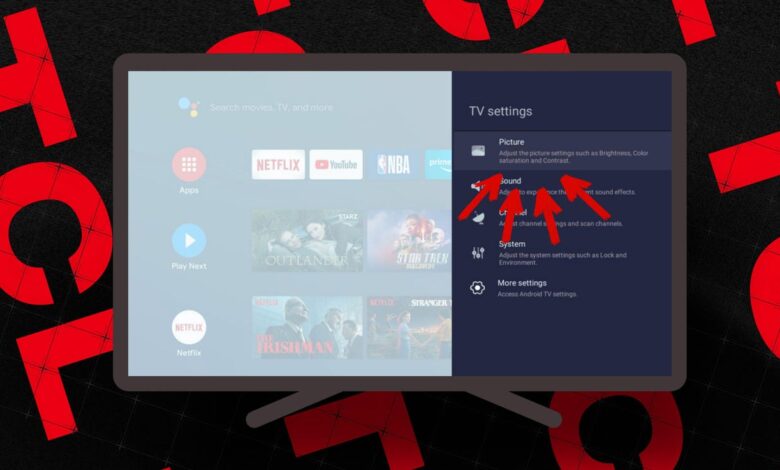

Follow ZDNET: Add us as a preferred source on Google.
ZDNET’s key takeaways
- Your TCL TV may not be optimized for home right out of the box.
- A few quick changes can dramatically improve your experience.
- You can also reduce unnecessary data collection while you watch.
TCL is known for its budget TVs, but in recent years, it has delivered some jaw-dropping models and consistently rolled out excellent hardware that often rivals far more expensive sets. My issue, however, is that most TCL TVs ship with default settings that do not give you the best picture, performance, or privacy protections at home. Luckily, the fix is simple.
Also: Own a smart TV? These 13 features can dramatically improve your performance – here’s how
Your TCL TV has over a dozen different settings that give you fine-tuned control over how your TV processes motion, color, brightness, and even how much data it collects about you. Changing them is easy and can radically improve your experience.
Below are the TCL TV settings worth changing right away, why each one matters, and exactly how to adjust it.
1. Change the picture mode: Movie or Filmmaker
Most smart TVs now include multiple picture modes, including TCL models, which often default to Standard, Vivid, or Sports. These modes use overly cool colors, excessive brightness, and artificial contrast. They are meant to stand out on showroom floors, but at home, the effect is often too aggressive. Instead, you will want to use Movie or Filmmaker mode, which is tuned for accuracy.
Also: Your Roku has hidden settings and menu screens – here’s how to unlock them
These modes use a warmer color temperature, more realistic contrast, and less processing overall. Filmmaker mode goes a step further by automatically disabling motion smoothing and using stricter standards for frame rate, color, and aspect ratio so content is displayed as the director intended. When you switch to either mode, the image may look yellow or warm at first, but that is normal.
Your eyes are just adjusting from the overly blue default.
- Go to Settings.
- Open Picture or Picture settings.
- Select Picture Preset or Picture Mode.
- Choose Movie or Filmmaker (on 2025 and newer models).
Note: If you have an older Roku-powered TCL TV, press the * (asterisk) button on the Roku TV remote, then go to Picture settings > Picture Mode. You will see HDR Dark, HDR Standard, and HDR Bright options. HDR Dark is designed for dim rooms and offers the most accurate color and shadow detail. HDR Standard balances brightness for everyday viewing, while HDR Bright increases brightness for well-lit rooms. I prefer HDR Dark since I tend to watch movies at night.
2. Turn off Motion Clarity (or motion smoothing)
Ever hear of the dreaded „soap opera“ effect on TVs? Its technical name is motion smoothing, although TCL calls it Motion Clarity on TCL Google TVs. Whatever you want to call it, it does the same thing: It inserts artificial frames to make motion appear smoother. In actuality, movies and shows end up looking cheap and unnatural, especially during fast-paced action scenes.
Also: How to turn off motion smoothing on your TV (and why it makes such a big difference)
Some people like motion smoothing for live sports, but for most content, it is not very good. I recommend turning it off.
- Go to Settings.
- Open Picture or Picture settings.
- Open Advanced Picture Settings.
- Choose Motion.
- Turn Motion Clarity off.
3. Turn off Dynamic Contrast
Newer TCL Google TVs include a Dynamic Contrast feature that auto-boosts brightness and contrast based on each scene in the movie or TV show you are watching. I find, however, that it often causes highlights to blow out and shadow detail to disappear across a lot of content. I prefer to turn it off to keep brightness and contrast consistent from scene to scene and to preserve fine detail.
- Open Settings.
- Open Picture or Picture settings.
- Select Advanced Picture Settings.
- Turn Dynamic Contrast off.
Note: If you have an older Roku-powered TCL TV, press the * (asterisk) button on the Roku TV remote, then go to Picture settings > Customize picture > Expert settings > Dynamic contrast to turn it off.
4. Turn off Dynamic Color
Newer TCL Google TVs have another dynamic feature that automatically adjusts what you see, but instead of toying with contrast, it plays with color. Called Dynamic Color, it exaggerates saturation to make colors really pop on your display. It looks great on a showroom floor, but at home, it can make skin tones look orange or unnatural and cause colors to shift depending on what is playing.
Also: I replaced my bedroom TV with this $170 Roku projector, and it is a worthy alternative
If you want more accurate, realistic colors rather than dramatic ones, turn it off.
- Go to Settings.
- Open Picture.
- Select Advanced Picture Settings.
- Turn Dynamic Color off.
5. Turn off Adaptive Color Temperature
Here is another newer TCL Google TV feature you can disable: Adaptive Color Temperature. It auto-adjusts white balance based on your room lighting or the content. While that sounds helpful, it causes visible color shifts mid-scene. Prefer consistency? Turn it off.
- Go to Settings.
- Open Picture or Picture settings.
- Select Advanced Picture Settings.
- Turn Adaptive Color Temperature off.
6. Turn off Black Stretch
You are not done shutting things off just yet. Newer TCL TVs include a Black Stretch feature that adjusts shadow detail by deepening or lifting blacks. If you are noticing a pattern here, I am not a fan of most automatic tweaks. In this case, it can crush detail in dark scenes or make shadows look gray. Turning it off preserves the original contrast of the content. I always choose original over artificial.
- Go to Settings.
- Open Picture or Picture settings.
- Select Advanced Picture Settings.
- Turn Black Stretch off.
7. Turn off Adaptive Brightness
Newer TCL TVs use a light sensor to auto-adjust screen brightness based on your room. This feature is called Adaptive Brightness, and in my experience, it can cause noticeable brightness fluctuations that look like flickering, especially during the day. Turn it off.
- Go to Settings.
- Go to Display and Sound.
- Select Intelligent Settings.
- Choose Intelligent Picture.
- Turn Adaptive Brightness off.
Note: This setting may also appear under Eye Health.
8. Change the Black Level (brightness)
Let us get into some manual tweaks you can do now that you have disabled many of the automatic features on your TCL TV. First up is brightness, which might be labeled Black Level on some Google TV models. This setting controls how dark the darkest parts of the image appear. If it is set too low, shadow detail disappears. If it is set too high, blacks look washed out.
Also: How to clear your Roku TV cache (and why it makes such a big difference)
There is no perfect recommendation here. It all depends on your preference and your room lighting, so play around with it.
- Go to Settings.
- Open Picture or Picture settings.
- Select Advanced Settings or Brightness Settings.
- Adjust Black Level or brightness using dark scenes.
Note: On older Roku-powered TCL TVs, press the * (asterisk) button on the Roku TV remote, then go to Picture settings > Display brightness. You will see Darker, Dark, Normal, and Bright options based on your room’s ambient light. Use Darker or Dark for dim rooms or nighttime viewing, Bright for well-lit rooms, and Normal for everyday viewing. I typically use Dark for watching movies at night.
9. Change the contrast
If you disabled Dynamic Contrast but still want to control the intensity of the bright highlights you are seeing, you can manually adjust your TV’s contrast. I find that, if it is set too high, bright areas can lose detail and become featureless. That said, I own a couple of TCL TVs, and both were very close to correct out of the box. Still, it is worth checking and changing yours if needed.
- Go to Settings.
- Open Picture or Picture settings.
- Select Advanced Settings.
- Adjust Contrast using bright scenes.
Note: If you have an older Roku-powered TCL TV, press the * (asterisk) button on the Roku TV remote, then go to Picture settings > Customize picture to adjust the contrast manually.
10. Lower the sharpness
Here is a setting I have not mentioned yet: Sharpness. Unfortunately, it does not add real detail. Instead, it applies something known as artificial edge enhancement, creating halos and visible noise. Lowering the sharpness gives you a more natural picture and texture.
- Go to Settings.
- Open Picture or Picture settings.
- Find Sharpness.
- Lower it until edges look clean.
Note: If you have an older Roku-powered TCL TV, press the * (asterisk) button on the Roku TV remote, then go to Picture settings > Customize picture to adjust the sharpness manually.
11. Turn off Noise Reduction
So you thought I was done with the automatic stuff? Think again. TCL includes a Noise Reduction feature that tries to smooth out noise grain and compression, but it often removes detail in the process. Unless you are watching very low-quality content, turn it off.
- Go to Settings.
- Open Picture or Picture settings.
- Select Advanced Picture Settings.
- Turn Noise Reduction.
- You might also a Digital Noise Reduction option, which you can also adjust or disable.
Note: If you have an older Roku-powered TCL TV, press the * (asterisk) button on the Roku TV remote, then go to Picture settings > Customize picture > Expert settings > Noise reduction to turn it off.
12. Try Gradation Clear
Gradation Clear is a newer, automatic feature you may not need, but I actually do not mind it and have found it useful. It reduces color banding, also known as posterization, resulting in smoother, more refined color gradients. Noticeable in scenes with sunsets, smoke, or underwater shots, I recently tried it while watching La La Land and The Princess Bride and thought it looked good.
- Go to Settings.
- Open Picture or Picture settings.
- Select Advanced Picture Settings.
- Enable Gradation Clear, if needed.
13. Try LED Motion Clear
Not all newer, automatic features are bad, and some may even be worth trying, like LED Motion Clear on Google TVs.
Also: Every Roku user should know these 15+ shortcuts that unlock the system’s best features
It inserts black frames to darken the image, sharpen motion, and improve clarity. I tried it while watching Midsommar, a horror film that deliberately uses relentless, high-key daylight, and found that it added shadows and helped heighten the uneasy mood. This setting is optional and completely preference-based, but it can be fun to experiment with on different movies and shows.
- Go to Settings.
- Open Picture or Picture settings.
- Select Advanced Picture Settings.
- Toggle LED Motion Clear.
14. Turn off ‘Use Info from TV Inputs’ and ACR
OK, I am done with picture settings, but there are a few privacy settings I want to cover next. For example, if you own a smart TCL TV, either Roku or Google TV, did you know it can track what you watch through cable boxes or game consoles? This feature is called „Use Info from TV Inputs,“ and I recommend turning it off to limit unnecessary data collection about your viewing habits.
TCL TVs also use ACR, or automatic content recognition, a data-tracking technology that identifies what you are watching across streaming apps, cable, and HDMI-connected devices to measure viewing habits and serve targeted ads. Disable this setting, too.
- Go to Settings.
- Select Privacy.
- Choose Smart TV Experience.
- Turn off Use Info from TV Inputs.
- Turn off ACR.
15. Turn off personalized ads
Here is another one for those of you with a smart TCL TV, such as Roku or Google TV. By default, it uses your viewing data to personalize ads, but you can reduce this without breaking anything. By disabling „Personalized ads“ in settings, you can prevent ads from being targeted or overly tailored to you. Some models may also have a „Limit ad tracking“ feature. Enable that, if so.
Also: How to disable ACR on your TV – and why it makes such a big difference doing so
- Go to Settings.
- Open Privacy.
- Select Advertising.
- Turn off Personalized ads.
- Enable Limit ad tracking, if available.
16. Review microphone access and permissions
Last but not least, if your TCL TV or remote includes a microphone, streaming apps you have installed may request access to it. You might already know that, but did you also know you can review and restrict this access at any time? Here is how.
- Open Settings.
- Go to Privacy.
- Select Voice or Microphone.
- Adjust microphone access and permissions.
Why can’t I see all these picture settings?
For most TCL TVs, just press the Settings button on your TCL remote to access most of the picture settings listed above. Some features may be limited to newer TCL TV models or may be limited to TCL Google TVs. Just dig into your settings to find out.
Also: The best Roku TVs of 2026: Expert tested and recommended
If you own a Roku-powered TCL TV, you can adjust most picture settings while watching a movie or show by pressing the * (asterisk) button on your TCL Roku TV remote or from the Roku remote app. Older models may have different picture settings, though. For instance, on my older Roku TCL TV, I do not have newer picture modes or some of the automatic features like Dynamic Color.
Will changing these picture settings damage my TV?
No. All the settings I mentioned above are safe to change and easily reversible.
Do I need to apply picture settings to every input?
Your particular TCL TV likely stores picture settings separately for each HDMI input, which is annoying. If you adjusted all the settings above and want those changes to apply everywhere, you will need to switch to each input and adjust its settings individually. Once you do, the changes are saved and remain enabled going forward. The only setting that applies across inputs is brightness.
Also: I changed 6 settings on my Roku TV to instantly give it a performance boost
Your TV may have an „Apply settings to all inputs“ feature. I have an older Roku-powered TCL TV and found it by pressing the * (asterisk) button in the Roku remote app, then going to Picture settings > Customize picture > Apply settings to all inputs.
Will turning off tracking affect my TV’s performance?
No. It only limits data collection and ad personalization.
How often should I review these settings?
If your TV has just installed a major software update or you have added a new device to an input, it is worth checking your settings.
What about sound?
Many TCL TVs include sound modes such as Standard, Auto, Movie, Music, News, or Dialogue, and Night. On TCL Roku TVs, you can change them by pressing the * (asterisk) button on the Roku TV remote or in the Roku remote app and opening Sound settings.
Movie mode offers the most balanced sound, Dialogue improves speech clarity, Auto adapts to what you are watching, and Night mode compresses volume for quieter listening. I tend to use Movie because I have the Roku sound system and like how that sounds.